
Moving to the UK from the US? Here is What to Do About Your Children's Education First.

If you are moving from the US to the UK, education is almost certainly the first thing on your list. It should be. The British independent school system is among the finest in the world, but it is built around timelines, entry points, and a competitive admissions culture that works very differently to anything you will have encountered in the States. Getting it right means moving quickly, with the right advice, before you arrive.
At Treberys Private we work with US families at every stage of the education journey in the UK. This article covers the things that matter most, with some practical insider knowledge that most guides leave out.
Our dedicated guide for US families moving to the UK is at treberysprivate.com/us-families-uk.
The entry point problem and why timing is everything
The most important thing to understand about the British independent school system is that it is not designed for families who arrive mid-stream. British schools have genuine key entry points, typically at age 7 (Year 3), age 11 (Year 7), age 13 (Year 9), and age 16 (sixth form). The most competitive London day schools and boarding schools fill their Year 7 places up to eighteen months before the start of term.
Families who arrive with little notice do not need to panic. We regularly support urgent and short-notice placements, and there is more available than most families assume if you have the right guidance. But the families who have the widest range of options are the ones who start the process long before they leave the US. A conversation with a school placement consultant while you are still Stateside gives you the full landscape rather than a narrowed one.
London day school vs boarding
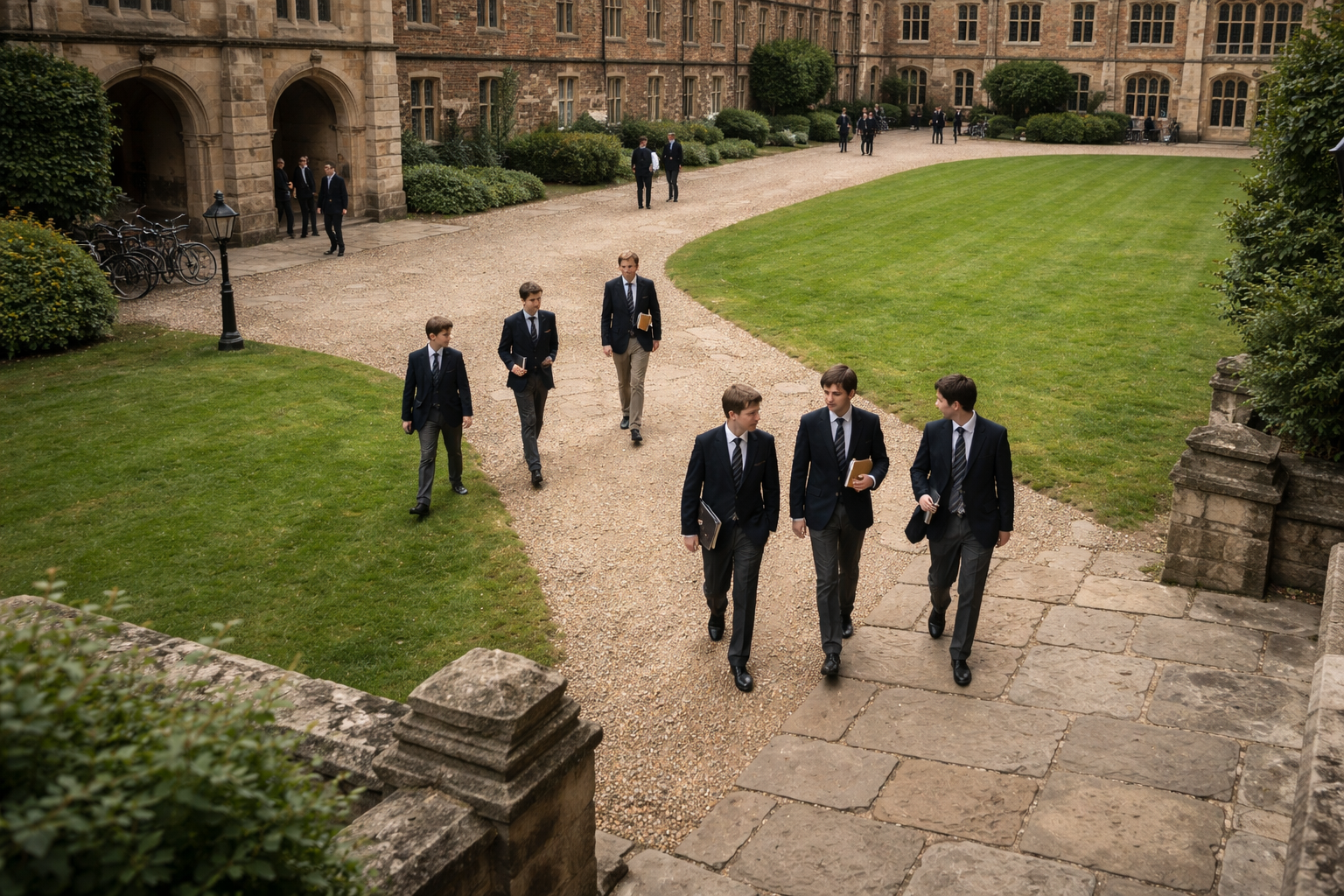
Most US families arrive assuming they want a London day school. Many of them are right. London's independent day school landscape is extraordinary, and for families settled in Kensington, Chelsea, Notting Hill, Hampstead, Richmond, or the wider commuter belt, there are outstanding options at every entry point.
But boarding deserves more serious consideration than most US families give it, for two reasons. First, Britain's great boarding schools consistently produce remarkable academic outcomes and are extremely well accustomed to American applicants. They actively value international diversity in their intake, and the transition for a US child is often smoother than families expect.
Second, for families whose work will require international travel, or who are settling outside London, boarding removes the logistical complexity of the school run and gives children a full immersion in British school life that day schools simply cannot replicate.
The decision between day and boarding is not purely geographic. It deserves its own conversation. Treberys Private's school placement service covers both.
The Cotswolds
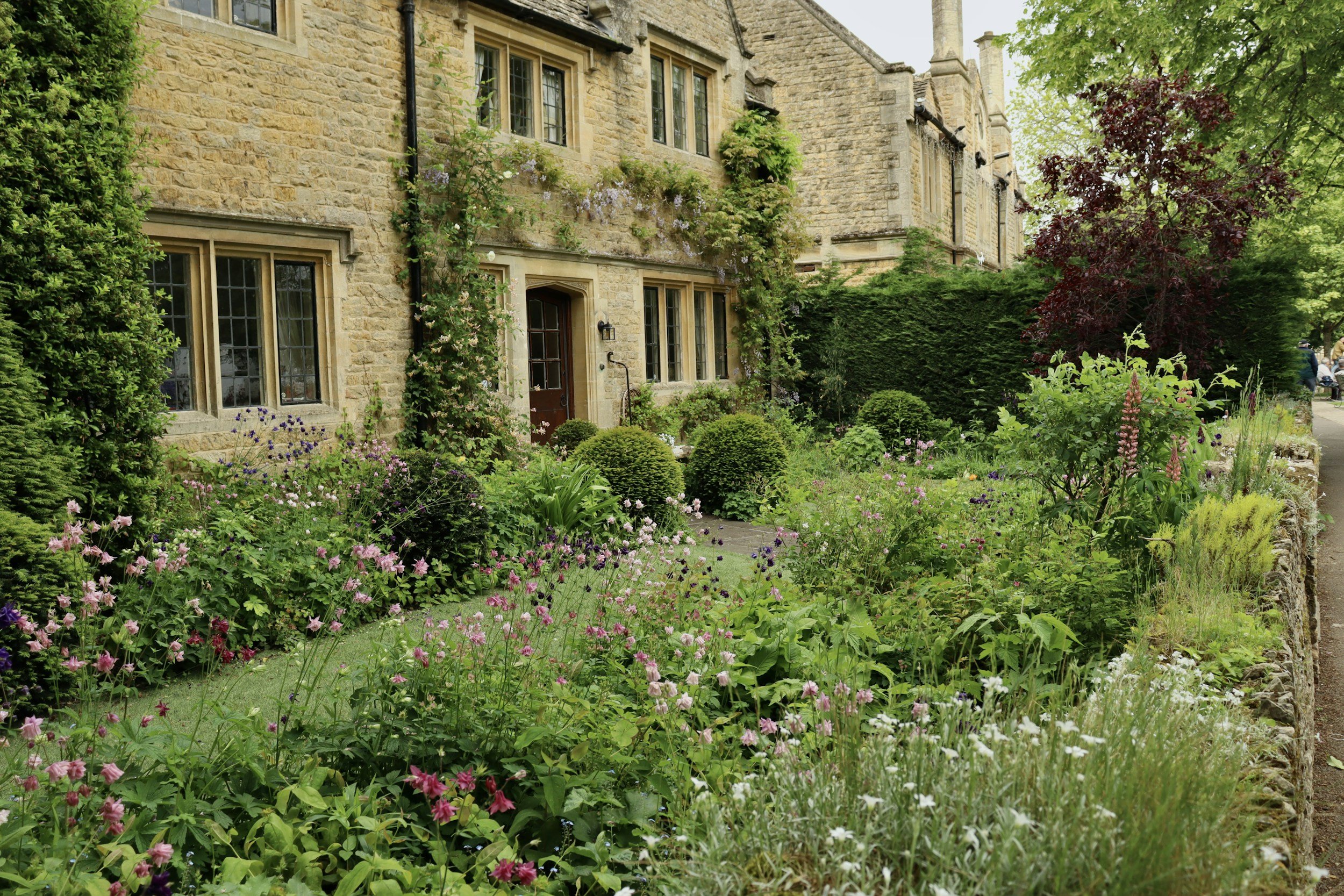
The Cotswolds has become a genuinely significant destination for US families. Villages around Chipping Norton, Burford, Stow-on-the-Wold, and the broader Oxfordshire and Gloucestershire countryside are seeing a notable influx of American families drawn by the landscape and the pace of life. London has its own timeless quality, of course, but there is something particular about this stretch of England, the stone villages, the open countryside, the sense of deep-rooted continuity, that appeals to many American families in a very specific way.
The educational infrastructure is there to support it. Oxford's independent schools are outstanding and less competitive to enter than the most sought-after London day schools. Cheltenham has a cluster of excellent schools including Cheltenham Ladies' College and Cheltenham College. And for boarding, the surrounding counties are home to some of the country's finest schools, including Stowe, Bloxham, Radley, Malvern, and many others within comfortable reach.
The curriculum gap and how to bridge it
British entrance assessments at 11+ and 13+ test specific skills that American schooling does not typically cover in the same way. Verbal reasoning, non-verbal reasoning, and the particular style of analytical writing expected by selective British schools are all learnable with the right preparation. With targeted tuition in the weeks and months before an assessment, US children can do extremely well. Without it, the results can be unnecessarily discouraging.
The cultural transition matters too. Terms and routines that are second nature to British children, house systems, form tutors, the particular social rhythms of a British boarding house or London day school, can take time to navigate. A tutor who has worked specifically with children transitioning from the American to the British system is worth their weight in gold during the first term.
Treberys Private places specialist tutors for exactly this purpose, available in person across London, the Home Counties, and the Cotswolds, as well as online.
University admissions
This is where we see the most significant knowledge gaps, and where getting proper advice early makes the most difference.
The British university system operates on a completely different model to the US college process. UCAS, the UK's centralised application system, requires students to apply to five universities with an October deadline for Oxford, Cambridge, and most medicine applications, and a January deadline for everything else. Offers are typically conditional on A-Level grades achieved the following summer. There are no SATs, no college essays in the US sense, and no early decision rounds.
For US families, the most important insight is this: if your child is considering both UK and US universities simultaneously, the timelines overlap in ways that require careful management. A student applying to both Oxbridge and Ivy League in the same cycle is managing two completely different processes with different requirements, different essay demands, and different preparation needs. It is entirely achievable, but it requires a coordinated strategy that ideally begins long before the final school year.
A-Level and IB qualifications are highly regarded by US universities including the Ivy League. A strong set of A-Levels demonstrates subject mastery and academic rigour that American admissions offices respect. An Oxbridge rejection, which happens to many very strong candidates simply due to the numbers, does not close the door to Harvard, Yale, or Princeton. We have guided students through exactly this dual-application process and the outcomes have been strong on both sides of the Atlantic.
Treberys Private manages the full university admissions process for a small number of students each year, covering both UK and US applications.

In-home support
Many US families, particularly those settling into larger homes in the countryside or dividing time between London and a country house, find that in-home educational support is a natural and practical choice. A residential tutor or governess who lives within the household and understands both the British and American educational contexts can make the transition genuinely smooth, academically and socially. For families arriving with younger children, the right governess can be transformative.
Treberys Private places residential tutors, governesses, and nannies for private families across the UK.
Where to start
The earlier the conversation, the more options are available. We work with US families from the moment the move is decided, and we are happy to talk through your family's situation at any stage of the process. There is no obligation and every enquiry is handled personally.
Our full guide to education for US families moving to the UK is at treberysprivate.com/us-families-uk.
Get in touch at enquiries@treberysprivate.com.